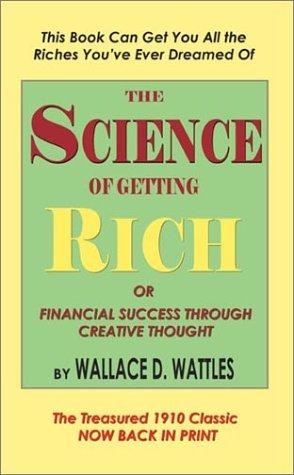
The Claim Worth Testing
Can a person move from scarcity toward wealth by changing the posture from which thought and action begin?
Wallace D. Wattles answered with absolute confidence in 1910. He argued that wealth follows a precise way of thinking and acting. He placed gratitude, clear mental imagery, creative service, and efficient action inside one system. He also treated that system as a science and gave metaphysical claims the force of physical law.
A century of hindsight lets us divide the book cleanly. Its guarantees fail. Its description of attention, initiative, value creation, and disciplined work retains force. The useful reading keeps agency while refusing magical causation. Thought changes what a person notices, attempts, practices, and persists with. Those changes can alter material results. They cannot command markets, erase structural limits, or guarantee a fortune.
Creation begins in attention, becomes credible through service, and earns its proof in the ledger.
Creative Mind and Competitive Mind
The book's most valuable distinction separates creation from competition. Wattles asks the reader to stop treating wealth as a fixed pile that must be taken from someone else. He wants the operator to create value, enlarge possibility, and give more in practical use than is received in cash.
This is a powerful correction to scarcity behavior. Competitive fixation shortens time horizons. It turns every peer into a threat, every negotiation into conquest, and every market signal into evidence that someone else is winning. It pushes businesses toward imitation because imitation looks safer than invention. It also tempts the operator to extract value before earning durable trust.
The creative posture asks a better commercial question: what can be built, improved, combined, taught, distributed, or made easier? That question directs attention toward unmet needs and underused resources. It makes wealth a consequence of useful arrangement rather than a trophy seized from a rival.
Competition still exists. Prices move. Customers choose. Capital is scarce. Competitors copy. A creative posture does not abolish these conditions. It determines how the operator responds to them. The aim becomes earning preference through greater usefulness, clearer positioning, better execution, and trust that compounds.
Wattles sometimes pushes the distinction too far, as though competitive reality disappears when thought becomes creative. It does not. Mature creation includes strategy. It sees rivals without becoming psychologically governed by them. It studies constraints without worshiping scarcity.
The Certain Way Without the Magic
Wattles repeatedly refers to thinking and acting in a Certain Way. The phrase carries mystical force in the book. Read operationally, it describes coherence.
A coherent operator holds a clear aim, chooses actions that serve it, completes present duties, and avoids scattering energy across contradictory pursuits. The goal, calendar, capital allocation, customer promise, and daily work begin pointing in the same direction. This does not guarantee success. It does reduce self-created friction.
Many people ask for wealth while organizing their days around avoidance. They declare an ambition, then protect every habit that prevents it. They want freedom while adding fixed costs, optionality while accepting brittle obligations, and compounding while constantly interrupting the process. The problem is rarely a shortage of desire. The parts of the system disagree.
The Certain Way becomes useful when translated into four observable commitments:
Clear aim
Name the material condition being built, the household purpose it serves, and the time horizon for judgment.
Present duty
Do the available work completely. Ambition loses credibility when ordinary obligations remain unfinished.
Useful exchange
Create enough value that the other party can rationally prefer the transaction and return for another.
Recorded evidence
Track actions, customer response, cash, and error. Confidence must share the room with receipts.
Coherence matters because repeated small contradictions consume enormous force. A clear system preserves attention for the work only the operator can do.
Gratitude as Attention Discipline
Gratitude occupies a central place in Wattles' method. He treats it as a link to the creative source of abundance. The theological claim belongs to the reader. The practical mechanism is easier to observe.
Gratitude changes the inventory. Scarcity attention counts only what is missing. It overlooks existing skill, relationships, tools, time, trust, customers, and solved problems. Gratitude restores those assets to view. It can interrupt envy, reduce reactive comparison, and make the next useful move easier to see.
This should never become compulsory optimism. Gratitude that forbids grief or anger becomes denial. A business can appreciate loyal customers and still confront a failing product. A household can recognize privilege and still name an unjust constraint. Clear sight can hold gifts and damage at the same time.
The strongest practice is specific. General declarations fade quickly. Name the resource, the person, the prior decision, or the difficult lesson. Then identify the responsibility created by it. Gratitude becomes active when appreciation leads to stewardship.
For an investor, gratitude can cool the appetite for constant action. Existing capital, liquidity, and a position that remains within the thesis are assets. The market owes no fresh excitement. For an entrepreneur, gratitude can reveal the installed base, repeat buyer, skilled employee, or supplier relationship that deserves care before another acquisition campaign begins.
Act Where Your Feet Are
Wattles rejects fantasy without present action. He tells the reader to begin in the current business and environment, performing each act efficiently while moving toward the desired work. This is one of the book's strongest corrections to wishful thinking.
The future is built through present interfaces. The next call, invoice, hiring decision, product release, training session, and capital choice are where an imagined condition acquires substance. Vision without a current interface remains entertainment.
Efficient action does not mean frantic activity. It means choosing acts that carry the purpose forward and completing them with care. A hundred motions can conceal the absence of one decisive conversation. Speed can multiply waste when direction is wrong.
The operator should therefore distinguish motion, output, and outcome. Motion is effort. Output is the completed artifact or decision. Outcome is the change produced in the world. Wattles is strongest on motion and intention. A present-day practice must connect all three.
The New Thought Lineage
The Science of Getting Rich emerged from the New Thought movement, a broad current that joined mind, spirit, health, prosperity, and personal agency. The movement responded to fatalism by insisting that inner life matters. It gave ordinary readers a language for directing attention and refusing inherited limits.
That lineage explains both the book's energy and its errors. New Thought often converted a valuable psychological observation into a universal metaphysical claim. Thoughts influence behavior, perception, relationships, and persistence. From there, some writers concluded that thought directly produces every material condition. The leap exceeds the evidence.
The tradition also carries a moral hazard. If wealth proves correct thinking, poverty begins to look like proof of mental failure. Illness, exclusion, violence, inherited disadvantage, and bad luck can then be blamed on the person enduring them. A doctrine meant to restore agency becomes a machine for withholding compassion.
Agency matters because people can affect part of their condition. Justice matters because no one authors the whole condition alone. Oikos needs both truths. The household acts, and the household also lives inside law, labor markets, credit systems, geography, health, family history, and chance.
What Survives Scrutiny
Several principles remain useful after the metaphysical machinery is removed.
- Attention selects opportunities. A declared aim makes relevant information easier to notice and irrelevant noise easier to refuse.
- Creation can expand the pie. New products, better systems, education, coordination, and care can create value that did not previously exist in usable form.
- Expectation changes conduct. A person who believes improvement is possible is more likely to attempt, learn, ask, and persist. Possibility is behaviorally consequential.
- Gratitude can protect judgment. Specific appreciation reduces compulsive comparison and brings existing resources back into view.
- Present action compounds. Repeated completion builds skill, reputation, data, trust, and optionality.
- Useful service supports durable wealth. Transactions repeat when value is real, promises are kept, and counterparties retain dignity and choice.
None of these principles needs a cosmic guarantee. Their value appears in conduct and consequence.
What Fails
The title calls the method a science, but the book does not provide controlled evidence, falsifiable predictions, or a method for separating cause from coincidence. Success confirms the doctrine. Failure can always be assigned to imperfect faith, gratitude, or action. A claim that cannot lose cannot teach.
The book understates competition and institutional power. Creation can expand value, but access to land, credit, education, legal protection, distribution, and political influence remains unequal. A creative person can still face coercive contracts, monopoly power, discrimination, illness, or war.
Its certainty also invites survivorship bias. Successful believers become examples while disciplined believers who failed disappear from the sample. Timing, inheritance, network position, and luck receive too little weight.
The danger is greatest when metaphysics becomes blame. A person facing hardship should not be told that thought caused the hardship or that gratitude is the price of relief. Useful philosophy expands agency without inventing guilt.
Finally, abundance language can excuse poor risk control. A belief in endless supply does not remove cash flow, debt service, concentration, drawdown, or the possibility of ruin. Capital remains finite at the level where decisions are made. Survival deserves a line in every vision.
Keep a wide sense of possibility and a precise account of exposure.
An Operator's Protocol
The book becomes practical when its claims are translated into a weekly operating discipline:
- State the condition. Describe the wealth, freedom, or productive capacity being built and the human purpose beneath it.
- Inventory what already exists. List cash, skills, relationships, equipment, time, trust, and lessons that can serve the next move.
- Name the value exchange. Identify whose problem will be solved, how well, at what cost, and why the exchange should repeat.
- Select one efficient act. Choose the completed output most likely to produce information or progress this week.
- Protect the floor. Set limits on capital, time, debt, and reputation before optimism starts negotiating.
- Record the result. Capture what happened, what changed, and which assumption now deserves revision.
- Express specific gratitude. Name one resource or person and convert appreciation into an act of care.
- Return to creation. Ask what greater usefulness can be produced instead of obsessing over another person's score.
What Marc Actually Uses
Run a creation audit every Friday. The purpose is to connect inner posture to material evidence without confusing the two.
Vision
Write the condition being built in one sentence. Remove display, comparison, and borrowed goals.
Inventory
List the resources already present and the neglected asset that can be put to work now.
Creation
Name the completed output that increased usefulness for a customer, employee, partner, or household.
Constraint
State the external limit clearly. Respect it without turning it into identity.
Risk
Record the capital at risk, the stop condition, and the cost of being wrong.
Gratitude
Convert thanks into maintenance, recognition, payment, protection, or a kept promise.
Read Alongside
Think and Grow Rich
Hill inherits Wattles' emphasis on directed thought and adds planning, alliance, and persistence. Reading both exposes the recurring strengths and recurring excesses of prosperity literature.
The Psychology of Money
Housel restores uncertainty, tails, luck, and room for error. Wattles widens possibility; Housel keeps possibility from becoming a claim of control.
Poor Charlie's Almanack
Munger supplies inversion, incentives, and multiple models. His discipline tests the assumptions that Wattles asks the reader to accept on faith.
The Richest Man in Babylon
Clason gives the vision arithmetic. Retention, controlled spending, guarded principal, and productive capital turn creative intention into household structure.
Through the Oikos Pillar
Oikos holds household stewardship and economic participation together. Wealth is neither private fantasy nor a number detached from relationships. It is stored capacity moving through systems of trust, exchange, labor, law, and time.
Wattles belongs in Oikos because he refuses the idea that a person must remain psychologically captive to present conditions. He becomes unreliable when he treats private thought as the sovereign cause of those conditions.
The balanced position is demanding. See more possibility than fear permits. See more constraint than enthusiasm prefers. Create useful value. Keep records. Protect the household. Let gratitude deepen responsibility. Give outcomes enough time to compound while retaining the right to revise the method.
The Bottom Line
The Science of Getting Rich offers an energizing doctrine of creation wrapped in claims it cannot prove. Its metaphysics may serve some readers as faith, but they should not be presented as settled causation. Its treatment of poverty needs material conditions and moral humility restored.
The durable core is practical. Direct attention toward a worthy material aim. Stop making rivalry the center of thought. Inventory what is already present. Create greater usefulness. Perform the available work with care. Practice gratitude as stewardship. Track results. Respect risk. Revise when evidence changes.
Keep the creative mind. Keep the ledger open.
Sources and Further Reading
This is an original interpretation, not a chapter summary. It contains no purported quotations from the book. The primary text is Wallace D. Wattles' The Science of Getting Rich (1910), available through Project Gutenberg. Publication context and a current edition are available from Macmillan.